The main One Piece Card Game rarity codes are C (Common), UC (Uncommon), R (Rare), SR (Super Rare), SEC (Secret Rare) and L (Leader). They identify the card's base rarity or role, but they do not fully identify the collectible version—and they do not create a guaranteed price ladder.
A Rare parallel can be worth more than a standard Secret Rare. A stamped tournament card can sit in a completely different market from the ordinary printing with the same card number. Read the rarity code first, then identify the artwork and treatment before checking a Ringgit price.
The six core codes at a glance
These Romance Dawn examples show the base codes as Stacked Binder records them. The visible SAMPLE overlay comes from the publisher-supplied catalogue imagery; it is not evidence that a physical card is fake.
| C | UC | R | SR | SEC | L |
|---|---|---|---|---|---|
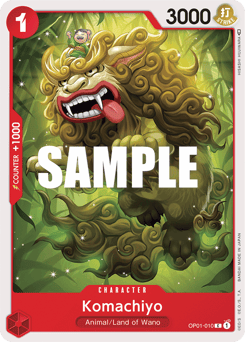 |
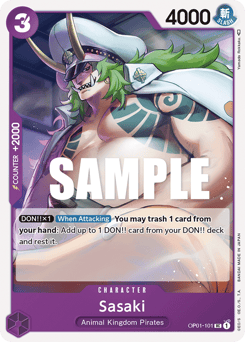 |
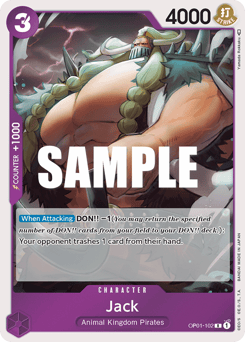 |
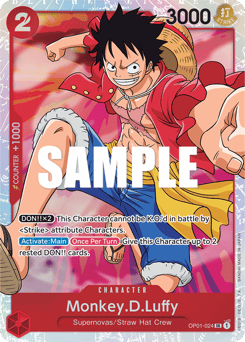 |
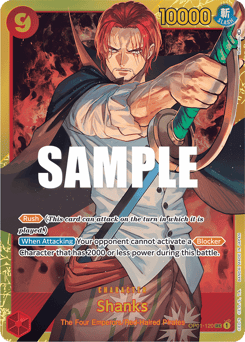 |
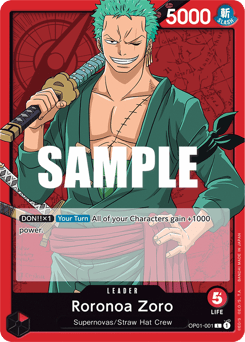 |
| Common | Uncommon | Rare | Super Rare | Secret Rare | Leader |
Bandai's official card list places the code beside the card number and card type. Its comprehensive rules state that rarity itself does not affect gameplay. Collector value is a market outcome, not a rule printed into the code.
What each rarity means
C — Common
Common cards make up much of a set's functional card pool. The code describes frequency in the product structure, not condition or price. A promotional or specially treated version of a Common can still become a separate collectible.
UC — Uncommon
Uncommon sits between Common and Rare in the base rarity system. As with Common, the exact printing matters: reprints, event stamps and alternate treatments should not be priced as though they were the standard copy.
R — Rare
Rare cards are usually shown as foil in the English catalogue, but the useful identity is the full label and image—not the letter R by itself. A Rare Alt Art, Winner Stamp or Championship Stamp is not interchangeable with an ordinary Rare Foil.
SR — Super Rare
Super Rare is a higher base rarity used across many characters. SR cards can also have Alt Art, Special Alt Art, Manga, stamped and serialized treatments. Those treatment words are the part most likely to separate two very different collector prices.
SEC — Secret Rare
Secret Rare is a base rarity associated with major chase cards, but not every SEC is more valuable than every SR or Leader. Supply, character demand, artwork, release source and treatment all matter.
L — Leader
Leader is both a card category used to build a deck around and the L rarity shown in the official list. A Leader parallel keeps the same card number and gameplay identity while using different artwork. For collectors, it must still be saved and priced as the exact version.
Where do SP, Manga, Alt Art and stamps fit?
They are better understood as treatments or variant families, not replacements for the six core codes. Stacked Binder combines the base rarity and treatment in labels such as Super Rare · Alt Art or Secret Rare · Manga Alt Art. That makes the catalogue entry explicit without pretending that every product uses one permanent treatment dictionary.
The practical identification order is:
- read the full card number, such as
OP01-120; - note the base rarity, such as SEC;
- compare the artwork and finish; and
- open the exact catalogue entry before using its RM reference.
The companion guide to One Piece card variants shows why one base number can lead to several collectible prices.
Rarity is not the same as value
A rarity code cannot account for condition, grading, regional supply or whether a listed price has real buyers behind it. It also cannot tell you whether a card came from an ordinary booster, an event, a prize distribution or a limited product. Use rarity to narrow identity; use the exact printing and dated market evidence to discuss value.
Stacked Binder's prices are source-market references converted with the matching MYR exchange-rate snapshot. They are not completed Malaysian sales or offers to buy. Read the pricing method and compare the same version before making a decision.
Common questions
Is SEC always the most valuable One Piece rarity?
No. A scarce parallel, stamped prize card or serialized SR, R or Leader can have a higher market reference than a standard SEC.
Is an Alt Art a separate rarity?
Usually it is a treatment of a base card rather than a new gameplay rarity. Use both parts of the label—for example, Super Rare · Alt Art—to identify the collectible.
Does L mean the card is rarer than SEC?
L identifies a Leader card. It should not be read as a universal value ranking above or below SEC.
Does SAMPLE mean the pictured card is counterfeit?
No. SAMPLE is present on publisher-supplied catalogue images. Ask for original photographs when checking a physical card offered for sale.
Can two cards with the same rarity have different prices?
Yes. Character, artwork, treatment, supply, condition and release source can all differ even when the base rarity code matches. Rarity examples and catalogue labels checked 29 August 2026. Reference values can change after publication.